15/09/2026
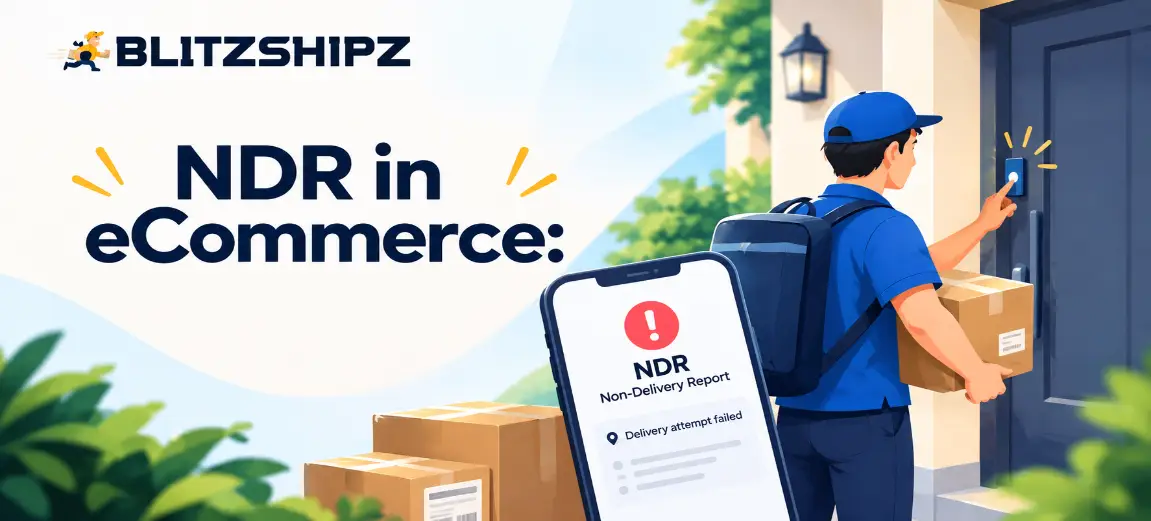
NDR in eCommerce: What It Means, Why Deliveries Fail, and How Auto Calling Reduces It
An NDR means a delivery attempt failed, not that the order is lost. Here is what each reason code means and how to save the order
Read More
In the ever-evolving world of commerce, understanding how businesses interact with each other is vital. While many are familiar with retail models that serve consumers directly, a huge portion of the global economy is powered by B2B business, short for Business-to-Business. These are transactions where one business sells goods or services to another, rather than to individual consumers.
If you’re ever wondered what is B2B business, or are curious about the difference between B2B and B2C, or looking for examples of B2B companies, this blog is your comprehensive guide. We will also explore some real-world B2B success stories and how innovative companies like BlitzShipz are revolutionizing the logistics landscape with effective business-to-business e-commerce solutions.
A B2B business refers to a model where transactions occur between two businesses rather than between a business and an individual consumer. For example, a manufacturer selling products to a wholesaler, or a logistics company providing supply chain services to an e-commerce firm.
Unlike B2C (Business-to-Consumer), where the end customer is an individual, B2B focuses on providing value, efficiency, and scalability to other companies.
Also Read: Handle Delayed or Lost Shipments
It’s essential to understand B2B and B2C difference when diving into the world of commerce. Here’s a quick breakdown:
Target Audience- The target audience for B2B companies is other businesses whereas B2C companies are individual customers.
Sales Process- The process of selling goods and services for a B2B company is usually longer, contract-based, and relationship-driven. But, a B2C firm usually operates in a shorter transactional mode.
Order Size- B2B companies usually deals in typically large and bulk orders, but the order size for B2C companies is comparatively smaller and individual purchases.
Marketing Focus- B2B companies focuses on value, ROI, and business solutions whereas a B2C company’s major focus in marketing is customer sentiments, individual needs, and profit.
The examples of popular B2B companies are Intel and BlitzShipz, and the most popular B2C companies include Amazon, Flipkart, Netflix, etc.
Clearly, b2b vs. b2c isn’t just about who the buyer is, it impacts how businesses market, sell, deliver their services.
Also Read: What Indian Buyers Expect in 2025
With the growth of digital platforms, business-to-business e-commerce is rapidly transforming how companies interact and trade with one another. Unlike traditional offline B2B transactions, this model allows companies to sell or procure goods and services via online portals, streamlining processes and increasing reach.
Key Features of B2B E-commerce:
Online catalogues and portals for businesses
Customized pricing based on volume
Automated invoicing and bulk orders
Integration with supply chain and inventory systems.
Also Read: Eco-Friendly Shipping Solutions
Let’s explore examples of B2B companies that are redefining sectors:
Alibaba- One of the largest business-to-business e-commerce examples, Alibaba connects manufacturers and suppliers from China with companies worldwide. Buyers can source everything from electronics to textiles in bulk, with custom options and competitive pricing.
Salesforce- A cloud-based CRM provider, Salesforce helps businesses manage their sales pipelines, customer interactions, and marketing campaigns, entirely tailored for other businesses.
BlitzShipz- BlitzShipz is a B2B logistics company delivering tailored, tech-enabled courier and supply chain solutions for growing Indian businesses.
Shopify Plus- While Shopify is known for powering D2C brands, Shopify Plus offers B2B business solutions for large-scale companies needing advanced features, multiple storefronts, and B2B-specific pricing.
Tata Consultancy Services (TCS)- TCS provides IT solutions and consultancy to global corporations. From digital transformation to system integration, their services are purely B2B.
IndiaMART- India’s leading B2B marketplace, IndiaMART connects wholesalers and manufacturers with retailers, offering a platform for bulk trade, negotiation, and business communication.
Also Read: What is consignment number
Among rising B2B stars in India, BlitzShipz stands out as a reliable and tech-powered logistics partner for businesses. In the bustling world of online retail and manufacturing, timely delivery and supply chain efficiency are essential. BlitzShipz fills this crucial gap by offering end-to-end courier and logistics solutions tailored for B2B businesses.
Custom B2B Plans- Whether you’re a small online seller or a large manufacturer, BlitzShipz offers customized logistics plans.
Warehousing and Distribution- The company handles everything from storage to last-mile delivery.
Tech Integration- BlitzShipz offers APIs and dashboard tools for businesses to track parcels, manage bulk shipments, and optimize delivery routes.
High-speed Delivery- BlitzShipz’s express delivery services cater to the fast-paced needs of today’s B2B e-commerce players.
Transparent Pricing- With clear rate cards and no hidden fees, businesses can plan their budgets efficiently.
From partnering with e-commerce platforms to servicing manufacturers and distributors, BlitzShipz is making logistics smarter, faster, and more reliable for Indian businesses.
Also Read: COD Shipping Services
B2B businesses are often seen as more stable and sustainable due to predictable revenue and log-term client relationships. Here are some benefits:
Recurring Revenue- Long-term contracts and repeat orders offer financial stability.
Higher Order Value- Orders are often placed in bulk, leading to higher revenue per transaction.
Stronger Relationships- B2B interactions foster trust and long-term collaborations.
Scalability- B2B companies can easily scale by targeting new industries or geographies.
These advantages make b2b business models an attractive option for startups and established enterprises alike.
Also Read: Professional Courier Tracking with BlitzShipz
Whether you’re planning to launch a B2B startup or upgrade an existing one, here are some tips:
Define Your Niche- Know which industry or business size you are targeting.
Build an Online Platform- A professional website or marketplace account is essential.
Optimize Communication- Use CRMs, email campaigns, and webinars to engage clients.
Choose Trusted Partners- Whether it’s logistics (like BlitzShipz) or payments, partner with reliable vendors.
Deliver Consistently- Your credibility will grow with consistent, timely delivery of goods or services.
The rise of digital commerce has elevated the role of B2B businesses in shaping economies worldwide. From tech providers to logistics enablers, the examples of B2B companies discussed here show how diverse and impactful this space truly is. As more companies shift to business-to-business e-commerce, it’s vital to understand how b2b and b2c differ, and how each approach brings unique value.
Whether you’re exploring how to courier goods, streamline operations, or just beginning your journey into B2B business, companies like BlitzShipz are paving the way with innovation, reliability, and speed.
An NDR means a delivery attempt failed, not that the order is lost. Here is what each reason code means and how to save the order
Read More
You reduce RTO in ecommerce by fixing the order before it ships and rescuing it before it comes back: validate addresses and phone numbers at checkout
Read More
The e-commerce and D2C landscape in India have changed dramatically in recent years, and 2026 is no exception.
Read More
Online shopping has revolutionized the way we buy everything- from groceries and clothing to electronics and even healthcare products.
Read MoreLudhiana, the industrial and commercial hub of Punjab, is often referred to as the "Manchester of India" for its booming textile
Read More